Google Ads Management
for UK Service Businesses
Thoughtful search campaigns for businesses that want clear targeting, reliable measurement and a practical view of what their advertising budget is doing.
Trusted by Businesses Across the UK





Ads.
Get a free auditMost service businesses running Google Ads are bleeding money on bad keywords, weak landing pages, and zero conversion tracking. We stop the bleed, rebuild the campaign, and turn every click into a booked job for businesses in London, Bristol, and Birmingham.
Campaign foundations
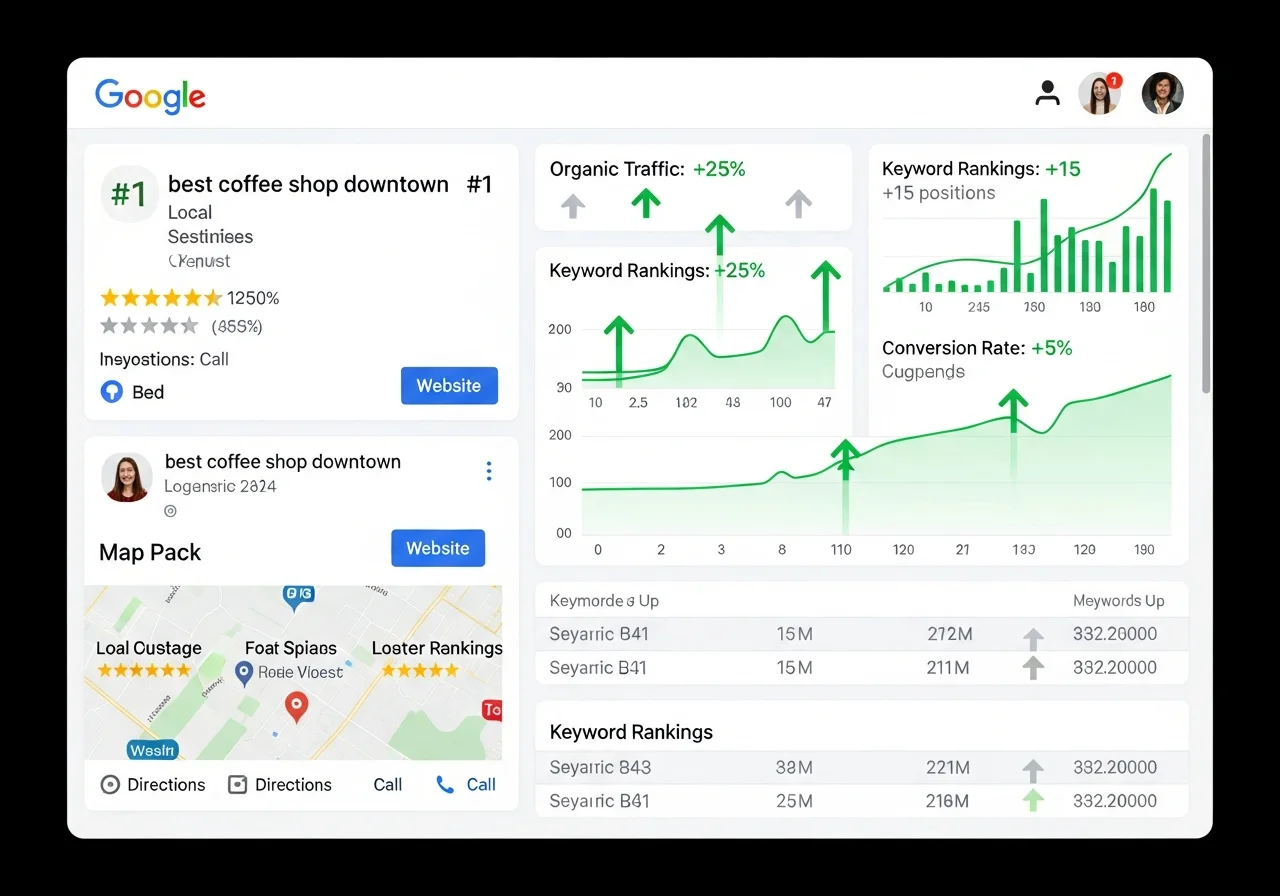
Search terms, location settings, ads and landing pages should work together around the service a customer is actively seeking.
What's included
A campaign structure designed for clear decisions and accountable management.
No Waste
Negative keywords from day one
We build an initial exclusion list and refine it using actual search-term information as a campaign develops.
Transparency
Monthly reporting you can actually read
Clear reports cover spend, clicks, conversions and the questions or changes that need attention.
Method
Launch with the right checks in place
Before launch, we check targeting, ads, budgets, landing pages and measurement so the account starts from a considered base.
Related project work
See the website foundations campaigns rely on.
Our published case studies focus on website and SEO projects rather than paid-ad performance claims. They show the service detail, customer journeys and tracking foundations we review before sending more traffic to a site.
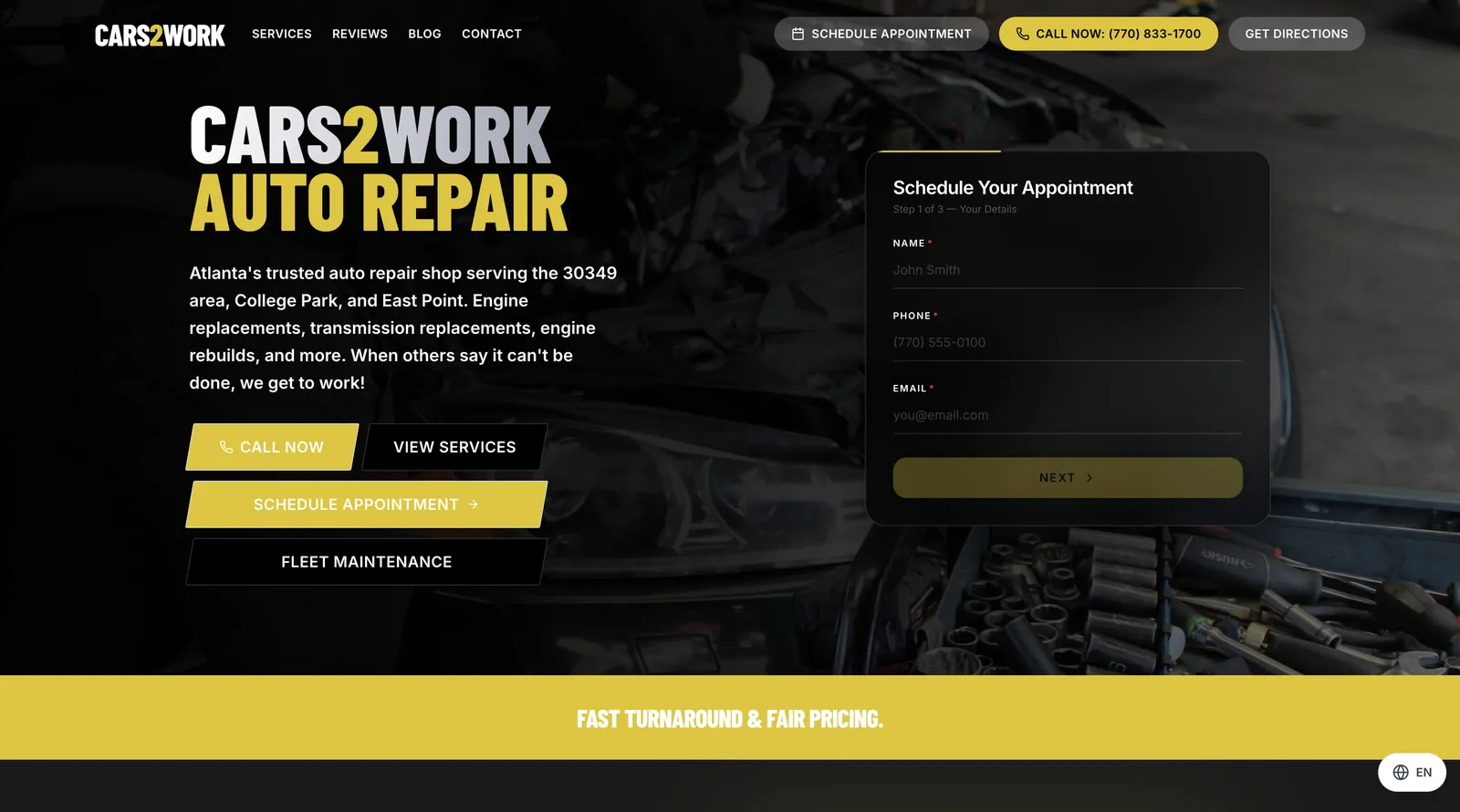
Cars2Work Auto Repair
See how a service-business website can organise repair information, booking routes and the next action for a visitor.
Read the case study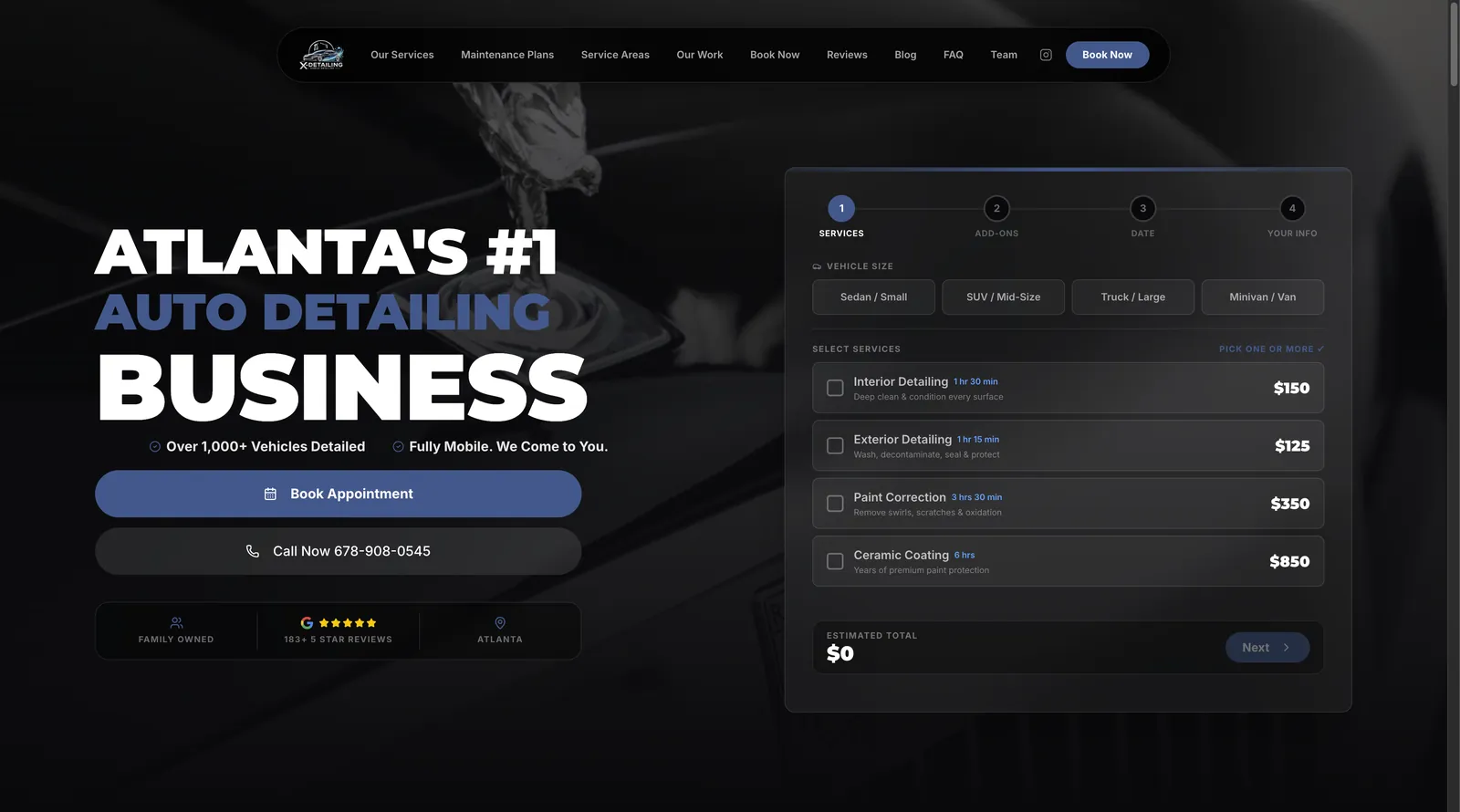
X-Detailing Mobile Detailing
See how service areas, clear packages and a focused enquiry journey can support a measurable destination.
Read the case studyProcess.
Get startedA sensible account is built through discovery, careful setup and ongoing review. We document priorities and make the numbers understandable at every stage.

From audit to launch
Campaign setup follows a documented plan covering services, locations, search intent, ads, landing pages and measurement.
What a useful Google Ads review should show.
Step 1
Free account audit
We review an existing account, or gather the information needed for a new one: services, service areas, capacity, competitors and website journeys.
Step 2
Build & launch
We organise campaigns and ad groups, write relevant ad copy, configure tracking where appropriate and check the journey before launch.
Step 3
Optimise monthly
We review search terms, settings, ads, budget allocation and recorded conversions, then share a plain-English monthly report and next steps.
Google Ads management for service businesses: what good account work involves
Google Ads can place a service business in front of people who are already looking for a solution. That does not make it a shortcut or a guaranteed source of work. A useful campaign starts with an honest understanding of the services you offer, the places you can reach, the enquiries you can handle and the information a potential customer needs before they contact you. Sitement manages Google Ads for UK service businesses with this practical context in mind. The goal is a clear, well-organised account that can be reviewed and improved using evidence rather than assumptions.
Paid search is particularly relevant when a customer has a specific need: a homeowner looking for a boiler repair, a business searching for commercial cleaning, or a driver seeking local vehicle servicing. Those searches are not all equally valuable. Some are urgent, some are exploratory, and some are looking for a job, a course, instructions or a free alternative. The work is to distinguish these intentions, present a relevant advert and send the visitor to a page that helps them decide whether to make contact.
Search intent comes before a keyword list
Keyword research is more than collecting phrases with a service and town name. We begin by mapping the core services you want to promote, the terms customers use, common qualifiers such as “emergency”, “near me”, “quote” or “repair”, and the parts of the UK you serve. We also look at the questions that indicate a person is still researching. A search for a price guide may need different messaging from a search for a same-day appointment. This makes it easier to choose where budget is appropriate and where a separate informational page or no advert at all is the better response.
Match types and search-term reports need careful interpretation. Broad coverage can reveal useful variations, while tighter targeting can provide more control; neither is a universal answer. We review actual queries, not just the keywords entered into the account, and use that information to adjust targeting. Seasonal work, emergency availability, specialist qualifications and travel limits can all change which searches make sense for a business. This is why keyword research is an ongoing part of management rather than a one-time spreadsheet.
Account structure that reflects your real services
A well-structured Google Ads account makes it possible to see what is happening without hiding everything in one large campaign. Campaigns may be separated by service category, geography, business objective or budget responsibility where that separation makes sense. Ad groups then bring closely related searches and adverts together. For example, a heating company might treat boiler repairs and new installations differently because the customer need, advert message and landing page are different. The right structure is not necessarily the most complicated one; it is the one that gives useful control and understandable reporting.
We consider campaign settings alongside structure: search network choices, devices, ad schedules, language, location options and the assets that can appear with adverts. These settings should reflect the way your team operates. If calls are only answered during certain hours, that is relevant. If one service is offered only in selected postcodes, that is relevant too. Account names, labels and change notes also matter. They make future reviews more efficient and help business owners understand why a budget or targeting decision was made.
Negative keywords protect relevance
Negative keywords tell Google which searches should not trigger an advert. They are essential, but they are not a promise that irrelevant traffic will disappear completely. We create initial exclusions based on your service offer and then review search-term data to identify patterns that are not appropriate: job seekers, training searches, DIY queries, product-only searches, locations outside your reach or unrelated services. An exclusion needs context. Blocking a word too widely can prevent a legitimate customer from seeing an advert, so negative lists are maintained with care rather than applied blindly.
Ad copy should answer the searcher’s question
Strong ad copy is specific, accurate and easy to scan. It reflects the service a person searched for, names a genuine next step and avoids claims that cannot be supported. We develop headlines and descriptions around your offer, service area, credentials, availability and contact options, subject to Google’s advertising policies. Sitelinks, callouts, structured snippets and call assets can give a searcher more context before they click. Each asset is checked for accuracy and kept aligned with the landing page. Advert testing is a way to learn which messages earn engagement and relevant enquiries; it is not a guarantee of a particular outcome.
Location targeting for London and beyond
For a local service business, location is not a footnote. Google Ads location settings need to match the actual area you can serve, whether that is a group of London boroughs, a defined radius, Bristol neighbourhoods or several towns across the Midlands. We discuss travel time, call-out fees, coverage gaps and areas where capacity is limited before choosing settings. Location reports can then help us see how campaigns are being reached across an area. Targeting should be reviewed with business reality in mind, because a click from a nearby place is only useful if you can genuinely provide the service there.
Conversion and call tracking make reporting meaningful
Clicks show interest; they do not tell the full story. Where the website and consent arrangements allow, we configure relevant conversion actions such as submitted enquiry forms, calls from ads, calls from the site and booked consultations. Each action should have a clear definition. A short accidental call is not the same as a qualified enquiry, and a form confirmation page does not prove a job has been won. We explain what is being measured, test the setup and flag limitations in the reporting. If your team can record lead quality or completed work, that feedback can add valuable context to campaign decisions.
Landing pages are part of the campaign
An advert makes a promise; the landing page needs to continue the conversation. We review whether the page clearly states the service, location, credentials, contact route and relevant details a customer needs. Mobile readability, page speed, phone links, forms and trust information all deserve attention. Sending every advert to a generic homepage can make it harder for visitors to find the answer they searched for. A dedicated page is not always required, but the destination should be useful, accessible and consistent with the advert. We do not treat a landing page as finished simply because it has been published.
Setting budgets and choosing bidding carefully
There is no single correct Google Ads budget for every UK service business. A starting budget depends on search demand, competition, geography, the services selected, your website and how many enquiries your team can responsibly manage. We discuss these constraints before recommending a plan. Daily budgets are monitored because Google’s delivery and monthly billing behaviour can vary. Budget allocation can also change when a business’s priorities change, for example when a seasonal service, a new location or a higher-value category needs attention.
Bidding is selected around the data available and the objective being measured. Available bidding approaches each have conditions, trade-offs and data requirements. We explain the approach in plain language and avoid treating any bidding strategy as a switch that guarantees enquiries. Changes are documented, given appropriate time to gather information where possible, and assessed alongside search terms, conversion quality and practical business feedback. Good optimisation is disciplined: it means knowing what changed, why it changed and what should be reviewed next.
Optimisation and reporting without vanity metrics
Regular optimisation can include reviewing search terms and negative keywords, checking budgets, refining location settings, updating ads and assets, examining landing-page journeys and validating conversion tracking. Not every change should be made at once. Making many simultaneous edits can make it difficult to understand what influenced later performance. We prioritise the work that is most relevant to your account and explain recommendations before substantial changes are made.
Reporting should be readable enough to support a business decision. Our reports focus on the period’s spend, impressions, clicks, recorded conversions, campaign activity and the next priorities, with context for what the figures do and do not show. We can discuss cost per recorded enquiry where tracking supports it, but we do not present a number as a guaranteed cost or as proof of revenue. A productive review also includes your team’s feedback: which calls were suitable, which services are fully booked and what has changed in the business.
Is Google Ads suitable for your business?
Google Ads can be worth considering for UK service businesses with a clear offer, a reachable service area, someone available to handle enquiries and a website that gives customers a credible route to contact. It can be less suitable when capacity is unavailable, service pricing is unclear, the offer is changing constantly or there is no workable way to respond to leads. A consultation is an opportunity to discuss those realities, review an existing account if you have one, and decide whether paid search is appropriate now. If it is, Sitement can create a measured plan for building and managing the account without promising a result that no agency can control.
Frequently Asked Questions
Google Ads questions from service businesses in London, Bristol, and Birmingham.
The right starting budget depends on local demand, click costs, the services you choose to advertise and your capacity to handle enquiries. We review those factors before making a recommendation rather than applying a standard figure to every business.
Timing varies with search demand, competition, budget, the website and the quality of conversion tracking. A campaign needs relevant data before it can be evaluated properly, and no specific result or timeframe can be guaranteed.
We will explain our management scope, fees and the advertising budget separately during a consultation, so you can understand what each part covers before deciding how to proceed.
Yes. We can review the current structure, settings, search terms, ads, landing pages and tracking, then set out practical priorities for improving how the account is managed. Any changes are based on the evidence available in the account.
Yes. We run Google Ads for service businesses in London, Bristol, and Birmingham, plus Cardiff and Newport. If your customers are in those areas, we can target them precisely.
Ready for Google Ads
That Actually Convert?
Talk to us about search campaigns, tracking and landing pages for your UK service business. We will discuss your services, locations, capacity and current advertising setup.
Send Us a Message
Tell us a little about your business and campaign needs.