
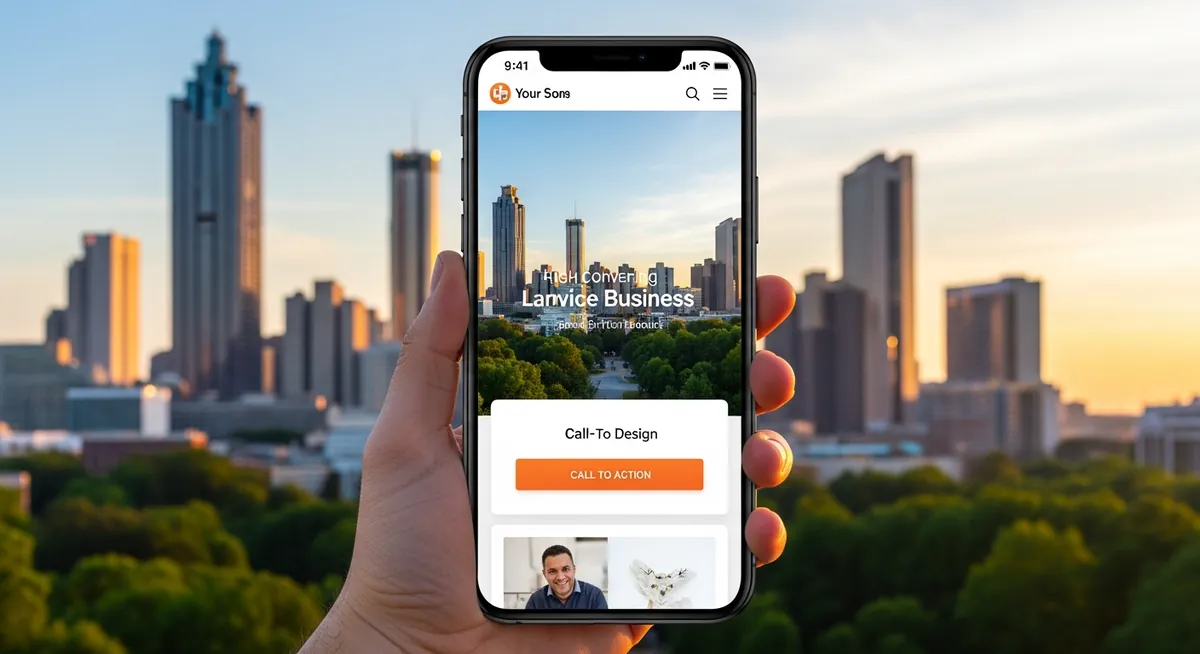
Start with the visitor's job
A service-business homepage may need to introduce the company, explain several services and guide different audiences. A landing page is narrower. It receives visitors from a particular advert, email, social post or search query and helps them complete one sensible next step: call, request a quote or book an appointment.
That focus does not mean removing every useful detail. It means arranging information around the decision the visitor is making. Someone looking for an electrician in London, for example, wants to confirm the service area, availability, credentials and how to get help. A company history can support that decision, but it should not obscure the answer.
Seven common landing-page problems
1. An unclear opening screen
The first screen should identify the service, the relevant area and the next step in plain English. “Quality solutions for every need” says very little. “Commercial boiler servicing in Croydon” gives the visitor useful context immediately. Avoid claims such as “best” or “number one” unless they can be independently substantiated.
Pair the heading with a short supporting sentence and a clear action. If calls are welcome, use a properly formatted, clickable telephone link. If the business needs project details first, make the quote form the primary action.
2. Desktop-first design
A desktop layout squeezed onto a phone often produces small controls, long lines of text and awkward spacing. Mobile-first design considers thumb-friendly buttons, readable type, short sections and the order in which information appears. Sitement's web design service uses responsive layouts so the enquiry journey remains clear across common screen sizes.
Test on actual devices as well as browser previews. Check the menu, telephone link, form fields, validation messages and confirmation screen. A form that looks tidy but is frustrating to complete is still a weak form.
3. Slow, unstable pages
Large images, autoplaying video, unnecessary scripts and poorly configured fonts can delay the useful content. Compress images in modern formats, reserve their dimensions to reduce layout movement and remove scripts that do not serve the page. Measure performance on a mobile connection rather than relying on how quickly the page loads on office Wi-Fi.
Performance work should support usability, not chase a score in isolation. Keep tracking sufficient to understand enquiries, but do not load tools merely because they are available.
4. Generic or unsupported trust signals
Trust is stronger when it is specific and verifiable. Relevant trade memberships, insurance details, guarantees with clear terms, original project photography and attributed reviews can all help. Only display figures, ratings or badges that are current and accurate. Our web design portfolio shows the type of real project evidence that can be more useful than a row of vague marketing claims.
Place the most relevant evidence near the claim or action it supports. Visitors should not have to search an About page to learn whether a contractor serves their area or holds an important accreditation.
5. Competing calls to action
A page can offer telephone and form contact without turning every section into a different instruction. Choose one primary action, label it consistently and repeat it where a visitor may reasonably be ready. Secondary links should answer genuine questions rather than lead people away without purpose.
Button copy should describe what happens next. “Request a quote” is clearer than “Submit”; “Check appointment availability” is more precise than “Get started”. Do not imply an instant response if the team cannot provide one.
6. A mismatch between advert and page
If an advert concerns office cleaning in Croydon, the destination should not open with domestic cleaning across the whole UK. Reuse the language and scope of the campaign while keeping every promise accurate. The service, area and offer shown in the advert should remain recognisable on the page.
This is also relevant to organic landing pages. A location page should contain genuinely local, useful information rather than swapping a place name into generic copy. The same principle supports Google Business Profile and local SEO work: consistency helps people understand whether the business is relevant.
7. An unnecessarily demanding form
Ask only for information needed to handle the first response. Name, contact details and a short description may be enough for an initial enquiry; a booking or regulated service may legitimately require more. Explain why sensitive or unusual information is needed and provide a clear privacy link.
Use visible labels, useful error messages and suitable input types. Confirm that the form has been received and tell the visitor what normally happens next, without promising a response time the business cannot reliably meet.
A practical page structure
There is no universal template, but a strong starting sequence is:
- Opening: specific service-and-location heading, concise explanation and primary action.
- Reassurance: genuine credentials or evidence relevant to the buying decision.
- Service detail: what is included, who it suits and any important exclusions.
- Process: a short account of what happens after the enquiry.
- Proof: relevant projects, attributed reviews or verifiable examples.
- Questions and action: objections answered, followed by the same clear CTA.
A planned service may need galleries, options and a detailed process. An urgent service may prioritise availability, coverage and telephone contact. For a business serving Sutton as well as wider London, coverage should be stated naturally rather than repeated in every heading.
Measure enquiries, not impressions
Before changing a page, decide what success means and make sure the action can be measured responsibly. Useful events may include completed forms, click-to-call actions and confirmed bookings. Keep marketing consent separate from the service enquiry and avoid collecting more personal data than needed.
Review recordings or analytics only with appropriate consent and privacy controls. Look for patterns: repeated form errors, exits before key information or visitors reaching the page for an unrelated service. Then change one meaningful element at a time. Testing cannot guarantee an uplift, but it can replace opinion with evidence from the business's own audience.
Traffic quality matters too. If a page receives irrelevant clicks, design alone will not solve the problem. Review campaign targeting, search terms and location settings alongside the landing page. For broader changes in how people discover suppliers, our guide to AI search optimisation for London service businesses provides additional context.
Before publishing
Read the page as a new customer. Is the offer clear? Are location and availability claims accurate? Do all telephone links, forms and confirmation messages work? Are credentials current? Can keyboard users see focus states, and do images have useful alternative text? Finally, ask someone outside the business to explain what the page offers after a brief look.
A high-converting landing page is not defined by a particular colour, word count or template. It earns attention by being relevant, credible and easy to use. Those fundamentals give a London service business a sound basis for improving the page with its own enquiry data.
Frequently Asked Questions
It makes the service, location and next step clear, works well on mobile and supports its claims with genuine evidence. A prominent phone link or short form, relevant trust signals and focused copy usually matter more than decorative effects.
The cost depends on the research, copy, design, integrations and tracking required. Ask for a scope that explains what is included rather than choosing on headline price alone. Sitement publishes current starting points on its pricing page.
Often, yes. A dedicated page can closely match the advert's service, location and promise, whereas a homepage usually serves several audiences. Keep the page truthful and useful, and test it against the most relevant existing page rather than assuming it will perform better.
Yes. Sitement designs and builds mobile-first landing pages and websites for service businesses in London and other UK locations. The scope can cover page structure, copy, responsive development and enquiry tracking, depending on what the business needs.